
Wireless Float Monitoring System
Solar-Powered Flood Detection for Remote Infrastructure
This system was built for valve chambers where power and communications are practical. The goal was simple. Detect rising water levels early and alert operators before it turns into a service issue.
The Problem
Valve chambers are spread across a large site, often in low areas that flood first. Most have no power, network, and unreliable cellular coverage. Standard monitoring options either cost too much to deploy or fail when conditions get bad.
We needed something that could live outside, run year-round, and just work.
The Solution
A self-contained wireless monitoring system built around custom designed low-power electronics and simple deployment.
- Float sender units monitor water level state
- Repeaters extend range across the site
- A controller receives and reports system status
- Each device hosts its own setup page for quick configuration from a phone
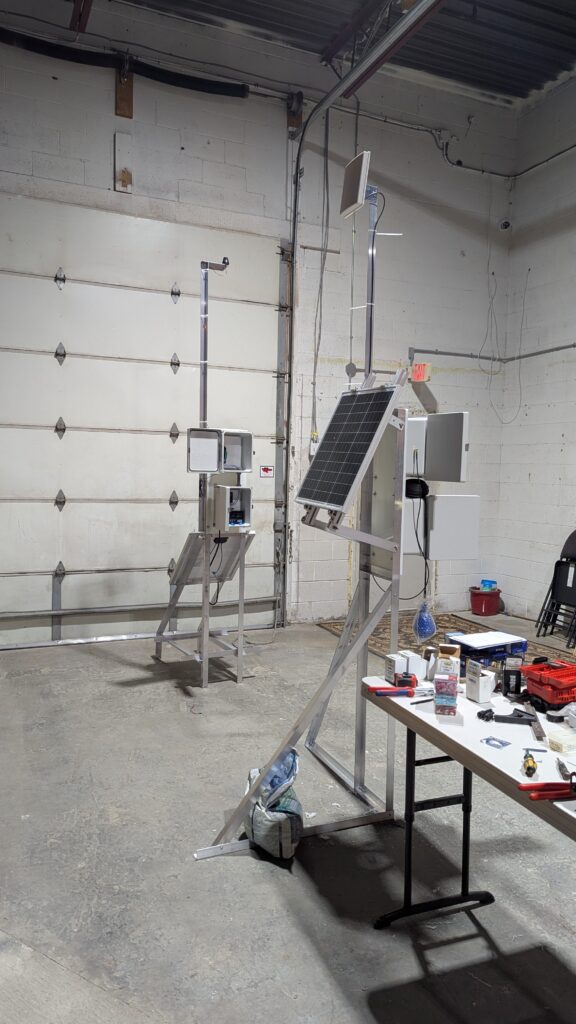
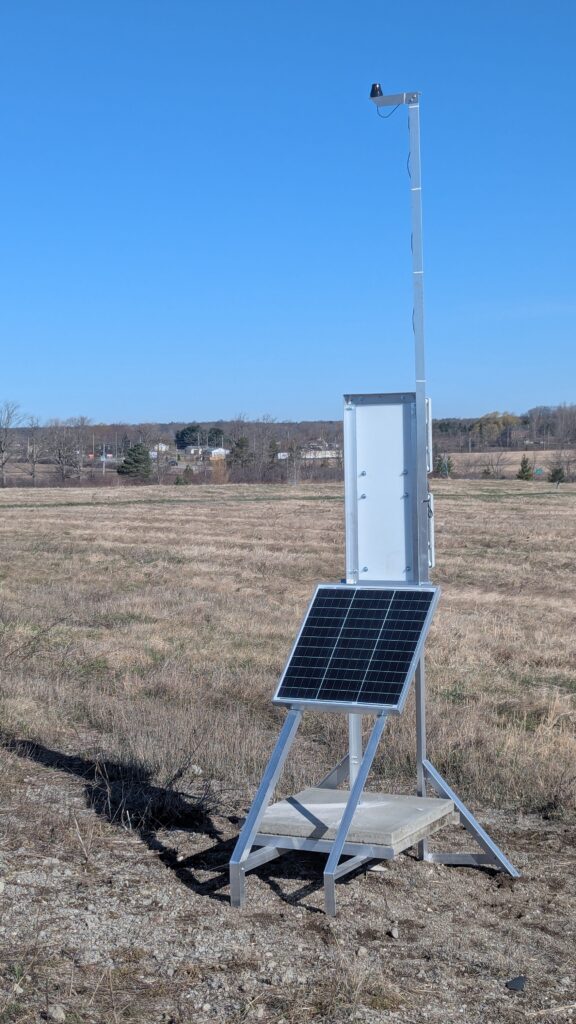
Each station is fully self-contained:
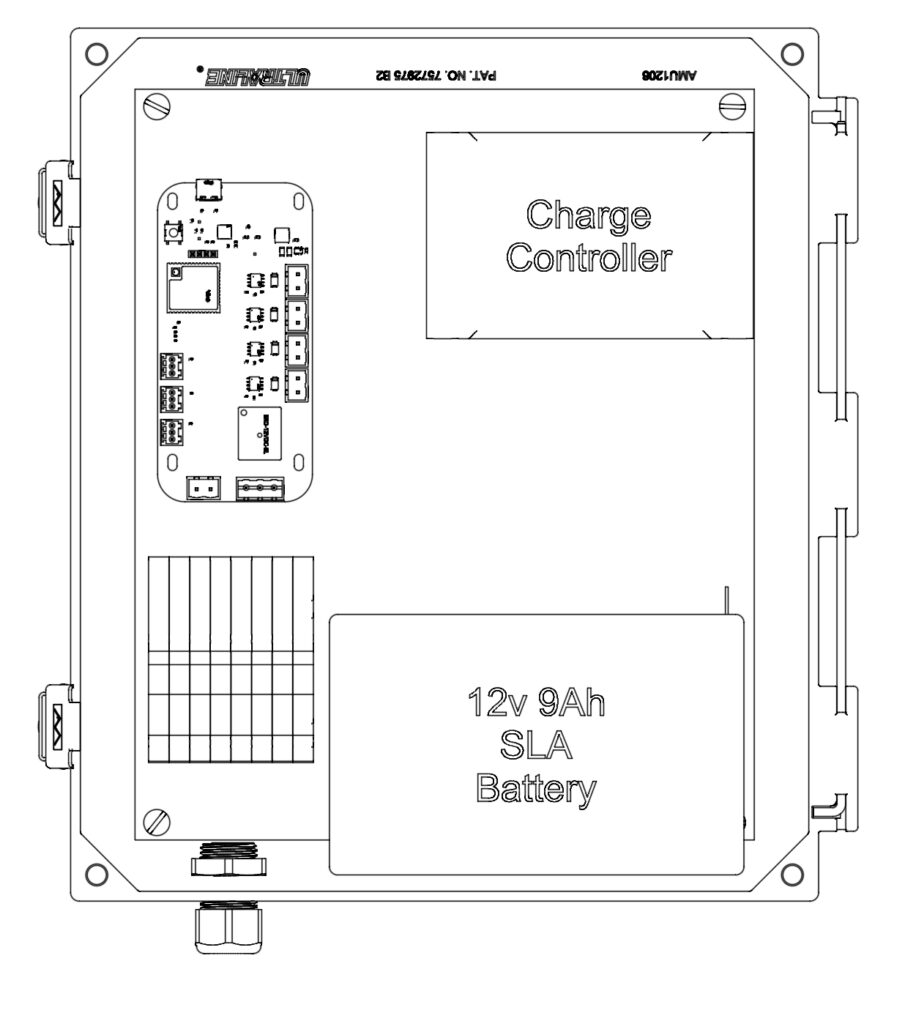
- Solar panel and charge controller
- 12V SLA battery sized for multi-day operation
- Weatherproof enclosure with clear internal layout
- Elevated antenna mounting for consistent signal
Key Challenges
Power vs Reliability
Low power is easy until winter shows up.
The system was designed around worst-case conditions, not averages. Duty cycles were tuned to reduce consumption without missing events. SLA batteries were chosen for their tolerance to cold and abuse.
Communication Without Infrastructure
No Wi-Fi, no guaranteed LTE, and no trenching.
Direct device-to-device communication. Repeaters were added to move data across distance and around obstacles.
Deployment in the Field
Each device broadcasts its own configuration page. A technician connects with a phone, sets the site name and device role, and is done in minutes. No extra tools, no programming.
Physical Environment
These units sit in wet, dirty spaces and get ignored until something breaks.
The structure uses aluminum for corrosion resistance and strength. The solar panel angle is set for real seasonal performance. The enclosure layout separates power and control cleanly so it is easy to service.
Network Resilience
A single failure cannot take down the system.
Repeaters allow multiple paths for communication. Devices reconnect automatically after power loss. The system does not rely on a central point to keep running.
The signal is the heartbeat, if consecutive packets are lost an alarm is triggered at the receiver and lets the operators respond before the communication loss becomes a larger issue.
The Result
A monitoring system that can be dropped into almost any site with minimal effort.
- No existing infrastructure required
- Fast installation with minimal setup
- Reliable operation through seasonal changes
- Early warning for flooding conditions
- Scales from a single chamber to a full site deployment
McClung SPS
This project involved installing customer-supplied VFDs to replace the existing soft starters at the station. The primary issue was space. The new VFDs would not physically fit within the existing MCC.
We worked with the client and the constraints of the site to relocate the VFDs to a position that made sense for both maintenance and day-to-day operation. The final layout allows operators to clearly see system status and access equipment for future maintenance.
During integration, the decision was made to retain the existing soft starters as a parallel backup. This allows the site to continue operating if a VFD is taken offline for service or repair, which was a key reliability improvement.
Controls were developed and commissioned to support both automatic and manual operation. This includes high-level backup control that applies to both the VFD and soft starter systems, ensuring the station can respond correctly under all conditions.
Additional controls were added to the local panel to give operators direct control over system selection. Operators can choose which system is active and run the pumps manually when required, without needing external systems or additional tools.
Result
- VFD upgrade completed without modifying the existing MCC
- Improved access for maintenance and troubleshooting
- Redundant operation through retained soft starters
- Full manual and automatic control available locally
- Increased reliability and flexibility for site operators
Ancaster Memorial Arts Centre Network
This project involved the design and installation of full-building network infrastructure to support audio, video, lighting, control systems, as well as operator and tenant networks across multiple performance and production spaces.
The facility required a network that could handle real-time AV systems under live conditions while also supporting day-to-day operational and tenant use. The existing setup lacked consistency and structure, which created risk during events and made expansion difficult.
We designed and deployed a unified network architecture that supports all building systems on a stable, organized backbone. AV, lighting, control, operator, and tenant networks are clearly separated where required, while still allowing seamless integration where needed.
The installation spans multiple rooms and technical areas, with equipment placed to support both performance and practical access. Consistency across the system was a priority, allowing for predictable operation, straightforward troubleshooting, and clean future expansion.
In addition to deployment, we continue to support and maintain the network, ensuring long-term reliability for both production and daily building use.
Result
- Complete building-wide network design and installation
- Integrated support for AV, control, operator, and tenant networks
- Stable platform for live production and daily operations
- Clear structure that supports growth and future changes
- Ongoing support and maintenance for long-term reliability